
Updated October 2026
Oklahoma weather keeps us on our toes. Ice storms, spring tornadoes and summer heat can all knock the power out, sometimes for days. If you've ever sat in a dark house wondering how long the food in the fridge will last, you've probably thought about a generator.
Portable vs. whole-home
A portable generator can run a few essentials through extension cords or a transfer switch. It's a lower upfront cost, but you have to set it up, fuel it and run it yourself, often in bad weather.
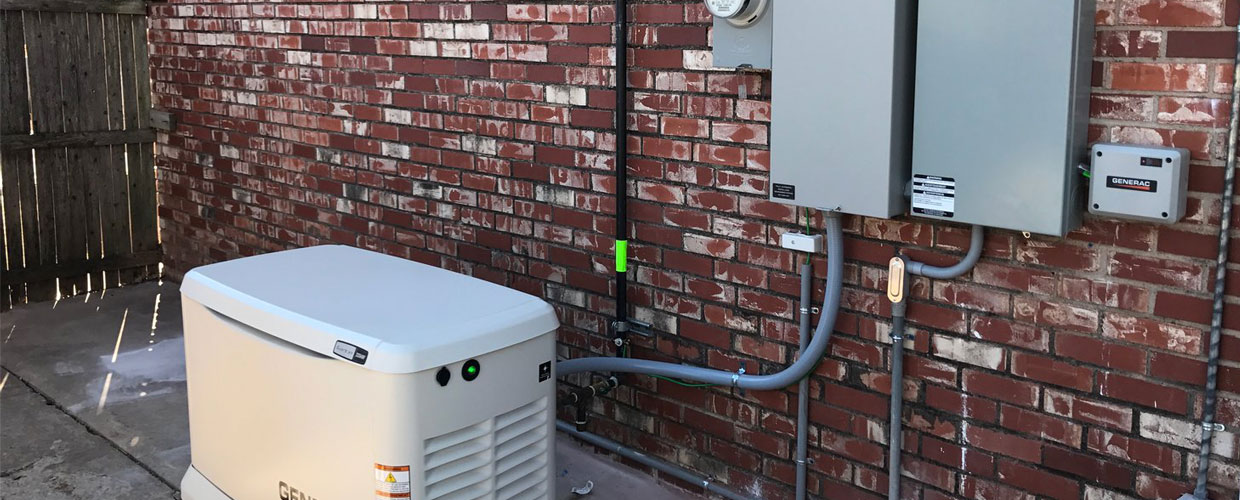
A whole-home standby generator sits outside like an AC unit. It runs on natural gas or propane and turns on by itself within seconds of an outage. Your lights, HVAC, fridge, well pump and medical equipment just keep running.
Signs a standby generator makes sense
- Someone in your home relies on medical equipment
- You work from home and can't afford downtime
- You've lost power more than once or twice in recent years
- You have a sump pump, well pump or freezer full of food to protect
- You travel and want the house protected while you're away
What goes into an install
Every home is different, so we start with a visit. We look at your electrical panel, your gas service, where the unit can sit safely, and which circuits matter most to you. From there we size the generator and the transfer switch to fit, handle the permit, and make sure it's all done to code.
Thinking about it?
See our storm protection generator service.
If you're in Moore, Norman, OKC or nearby and want an honest opinion on whether a generator is worth it for your home, give us a call or text. We're happy to come take a look and talk it through, with no pressure.

Bo Johnson
Hello, I’m Bo Johnson and I founded Passion Electric in 2014. After working as a Journeymen electrician for over ten years, I decided to start my own company!